

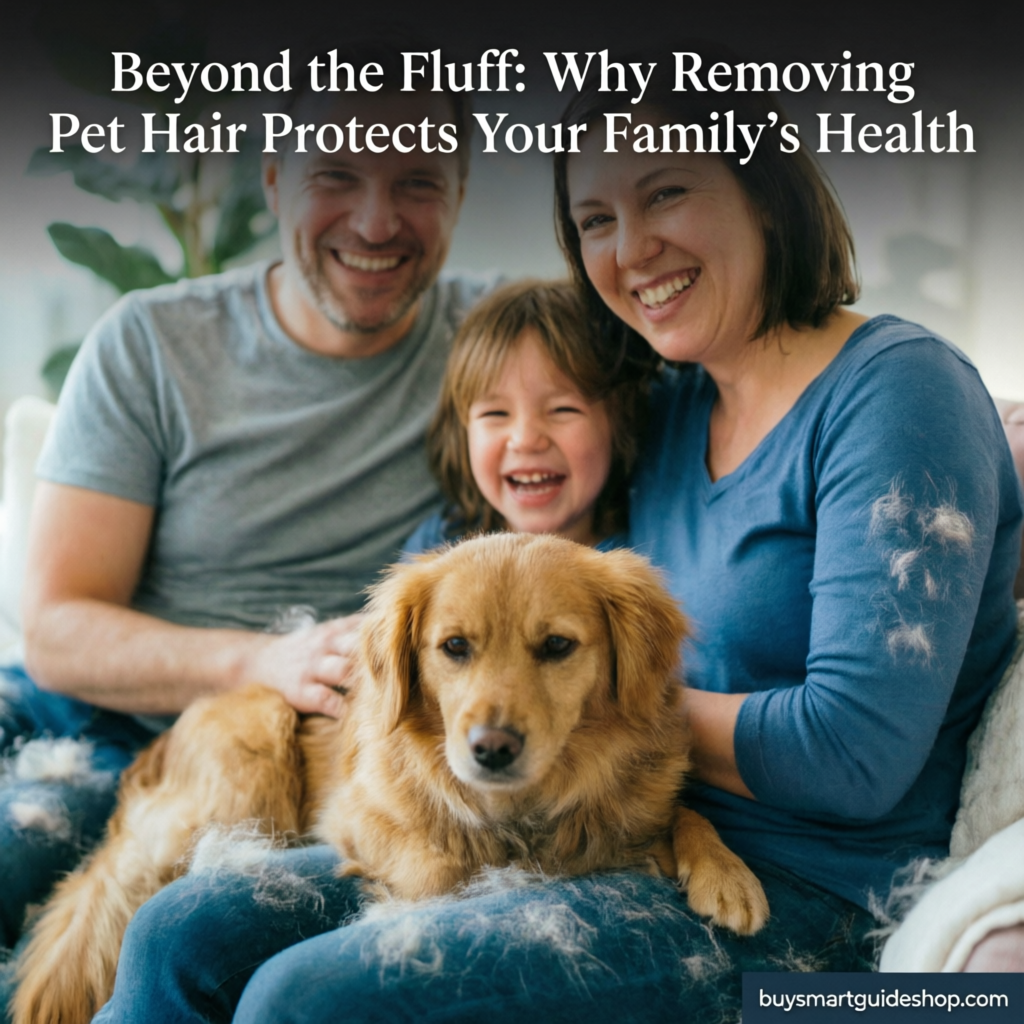
We all know that feeling—sinking into the couch after a long day, only to emerge covered in a fuzzy layer of your dog’s golden coat or your cat’s soft undercoat. It’s easy to dismiss pet hair as just another part of loving an animal companion. “It’s just fur,” we tell ourselves. “It’s harmless.”
But what if we told you that ignoring that seemingly innocent fluff could be setting you and your pet up for serious long-term health challenges?
Pet hair isn’t just a cosmetic nuisance. It’s a carrier of allergens, bacteria, and irritants that can compromise respiratory health, trigger chronic allergies, create skin conditions, and even impact your pet’s wellbeing. The good news? A simple investment in the right pet hair removal tools can prevent a cascade of health issues down the road.
Let’s talk about why shedding happens, where that hair goes, and most importantly—why staying on top of it is one of the best health decisions you can make for your entire family.
Why Do Pets Shed? Understanding the Natural (and Sometimes Not-So-Natural) Process
Shedding is your pet’s natural way of renewing their coat and regulating body temperature. Just like humans lose 50-100 hairs daily, pets shed old or damaged fur to make room for new growth. However, several factors influence HOW MUCH your pet sheds:
Normal Shedding Triggers:
- Seasonal changes (spring and fall “blowouts”)
- Breed genetics (double-coated breeds like Huskies, Golden Retrievers, and German Shepherds shed more)
- Age (puppies/kittens lose baby fur; seniors may shed more)
- Natural coat renewal cycle
Excessive Shedding Red Flags:
- Poor nutrition (lack of omega-3 fatty acids, protein deficiencies)
- Stress and anxiety (changes in routine, new environments)
- Parasites (fleas, mites, ringworm)
- Allergies (food, environmental, contact)
- Hormonal imbalances (thyroid issues, Cushing’s disease)
- Skin infections or underlying health conditions
The Health Connection: When pets shed excessively due to health issues, that extra hair isn’t just messy—it’s a symptom. And when that hair accumulates in your home, it becomes a vehicle for spreading the very allergens, bacteria, and irritants that may be causing the problem in the first place. It’s a vicious cycle that proper hair removal can help break.
Where Does Pet Hair Go? (Spoiler: Everywhere)
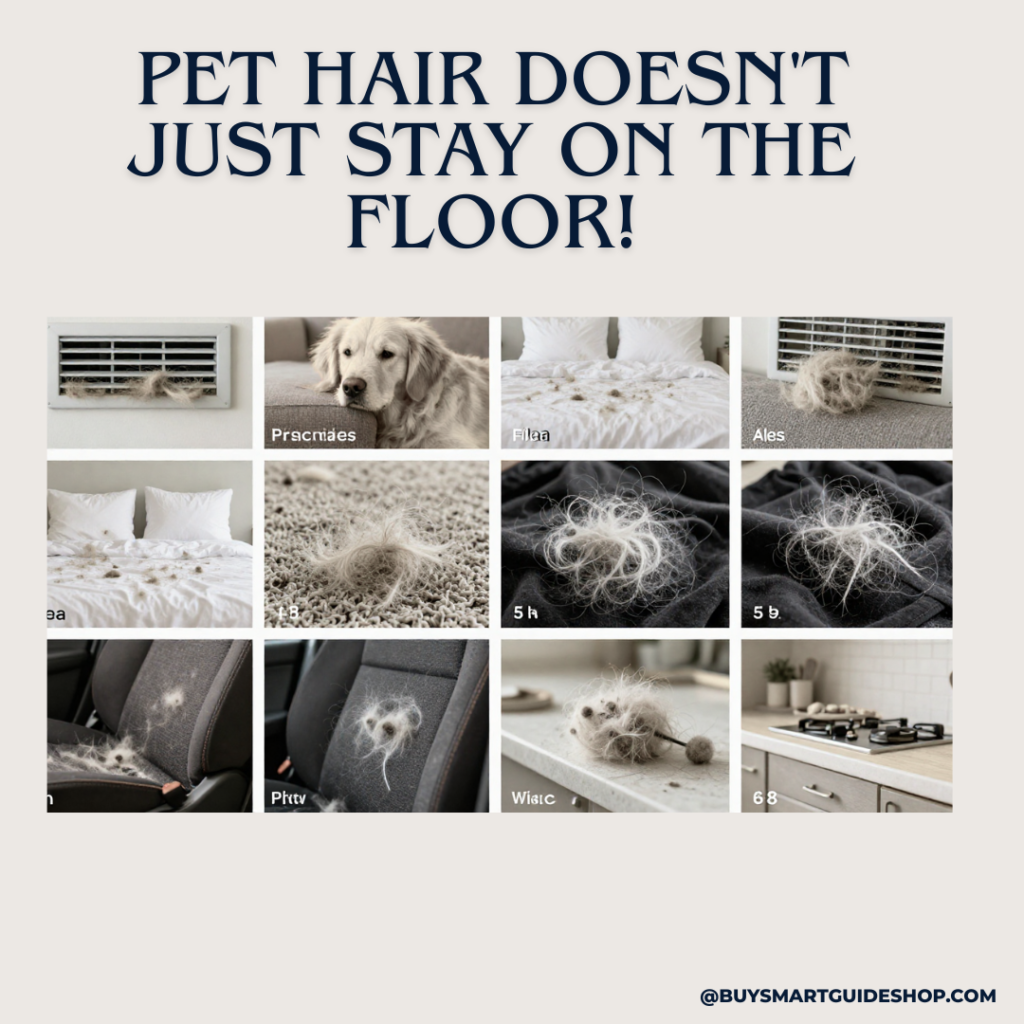
You might think pet hair just lands on the floor, but the reality is far more pervasive. Pet hair is incredibly mobile and clingy, thanks to its microscopic structure and static charge. Here’s where it’s hiding:
1. Airborne & In Your Lungs Pet hair and dander (microscopic skin flakes) become airborne when disturbed. These particles can remain suspended in the air for hours, circulating through your HVAC system and settling deep in your respiratory tract.
2. Upholstered Furniture Couches, chairs, and cushions are pet hair magnets. The fibers trap hair deep within the fabric, where it accumulates over time, creating a reservoir of allergens.
3. Bedding & Mattresses If your pet sleeps in your bed (and 56% of pet owners allow this), you’re spending 6-8 hours per night breathing in concentrated pet hair and dander.
4. Carpets & Rugs Carpet fibers act like a sponge for pet hair, trapping it deep below the surface where regular vacuuming often misses it.
5. Clothing & Laundry Pet hair clings to fabrics through static electricity, traveling with you throughout your day and spreading to other environments (work, school, friends’ homes).
6. Your Car Car upholstery traps pet hair, creating a concentrated allergen environment during commutes and road trips.
7. Air Ducts & Vents Hair circulates through your HVAC system, spreading throughout your home and reducing air quality.
8. Kitchen Surfaces & Food Prep Areas Yes, even where you cook. Pet hair can contaminate food preparation surfaces, creating hygiene concerns.
The Health Impact: Every location where pet hair accumulates becomes a potential health hazard. The longer hair sits, the more it collects dust mites, pollen, mold spores, and bacteria—turning innocent fur into an allergen bomb.
The Health Risks: Why “Just Living With It” Isn’t Safe
For Pet Owners:
1. Respiratory Problems
- Allergic Rhinitis: Sneezing, runny nose, itchy eyes, and congestion affect 10-20% of the population due to pet dander
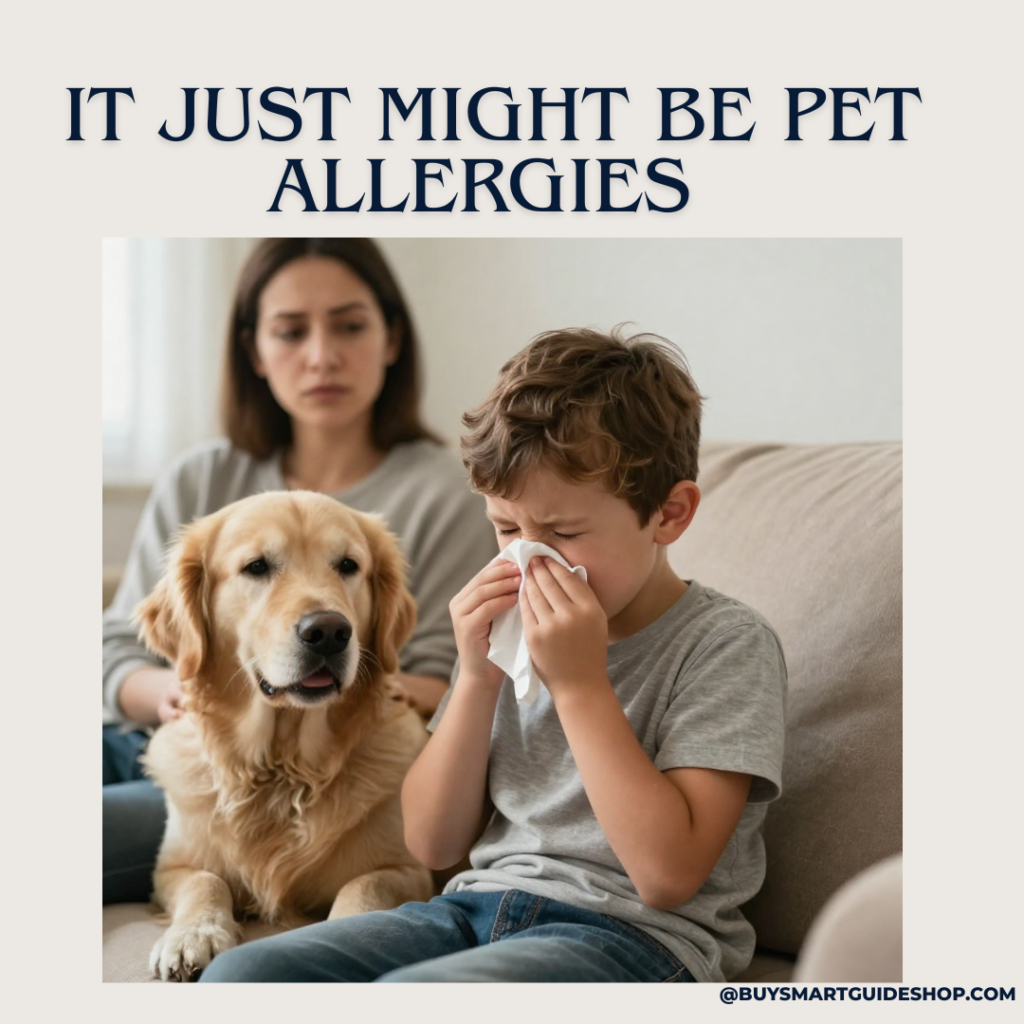
- Asthma Triggers: Pet allergens are a leading trigger for asthma attacks, especially in children
- Chronic Bronchitis: Long-term exposure to airborne pet hair and dander can inflame airways
- Hypersensitivity Pneumonitis: Rare but serious lung inflammation from chronic allergen exposure
2. Skin Conditions
- Contact Dermatitis: Red, itchy rashes from direct contact with pet hair and saliva proteins
- Folliculitis: Hair follicle inflammation from embedded pet hair
- Eczema Flare-ups: Existing skin conditions worsen with allergen exposure
3. Sleep Disruption
- Accumulated hair in bedding triggers nighttime allergy symptoms
- Poor sleep quality affects immune function, mental health, and overall wellbeing
4. Secondary Infections
- Pet hair can carry bacteria (Staphylococcus, E. coli) and parasites
- Compromised respiratory systems are more susceptible to infections
For Your Pet:
1. Skin & Coat Problems
- Matting: Unremoved loose hair tangles with healthy fur, creating painful mats that pull on skin
- Hot Spots: Trapped hair creates moist, bacteria-rich environments leading to acute moist dermatitis
- Skin Infections: Accumulated dead hair prevents proper air circulation, promoting bacterial and fungal growth
- Parasite Haven: Fleas and mites hide in matted, unremoved fur
2. Overheating
- Excess undercoat prevents proper temperature regulation
- Can lead to heat stroke in warm weather
3. Digestive Issues (Especially Cats)
- Excessive self-grooming of loose hair leads to dangerous hairballs
- Can cause intestinal blockages requiring surgery
4. Pain & Discomfort
- Mats pull on skin, causing chronic pain
- Prevents owners from spotting lumps, wounds, or skin issues early
5. Behavioral Changes
- Discomfort from matted fur can cause irritability, aggression, or withdrawal
- Chronic itching leads to obsessive licking and scratching
Prevention First: Reducing Shedding at the Source
Before we talk about removal tools, let’s address how to minimize excessive shedding:
1. Nutrition is Foundation
- Feed high-quality, species-appropriate food
- Supplement with omega-3 fatty acids (fish oil)
- Ensure adequate protein intake
- Address food allergies promptly
2. Regular Grooming
- Brush your pet 2-7 times per week (depending on breed)
- Professional grooming every 6-8 weeks for high-shedding breeds
- Bathing with appropriate shampoo (not too frequent—can dry skin)
3. Health Monitoring
- Annual vet checkups
- Immediate attention to sudden shedding increases
- Parasite prevention year-round
- Stress reduction (routine, exercise, mental stimulation)
4. Environmental Control
- Use air purifiers with HEPA filters
- Wash pet bedding weekly in hot water
- Keep pets off furniture if allergies are severe
- Maintain consistent humidity levels (40-50%)
Even with perfect prevention, shedding is inevitable. That’s why having the RIGHT removal tools isn’t optional—it’s essential.
That cute pile of fur on your black sweater isn’t just a minor inconvenience. It’s not “just part of loving a pet.” And it’s definitely not harmless.
Every time you breathe in those microscopic hairs, every time your child sneezes after playing with the dog, every time you wake up congested and reach for another tissue, you’re paying a price for that unconditional love. So many pet owners suffer in silence, thinking this is just “how it is.” They accept chronic allergies, constant cleaning, and compromised air quality as the cost of admission for having a furry family member.
I’m here to tell you: It doesn’t have to be this way.
You can have BOTH the joyful moments of your dog’s head in your lap AND a home that doesn’t trigger asthma attacks. You can cuddle your cat without waking up with itchy, watery eyes. You can love your pet fiercely while protecting your family’s health.
The difference between those two realities? Knowledge and action.
You now know WHY pet hair removal matters. You understand the health risks-respiratory issues, skin conditions, allergic reactions, and the long-term consequences of breathing in allergens day after day. You’ve seen how unremoved hair affects not just you, but your beloved pet’s comfort and wellbeing too.
But knowledge without action is just guilt.
And I don’t want you to feel guilty. I want you to feel empowered.
Because here’s the beautiful truth: Solving this problem isn’t complicated, expensive, or time-consuming. You don’t need to rehome your pet. You don’t need to live in a sterile, fur-free prison. You don’t need to choose between your health and your heart.
You just need the right tools.
The right deshedding brush used for 10 minutes a day. The right vacuum with proper HEPA filtration. The right air purifier running quietly in your bedroom. The right grooming routine that becomes bonding time, not a chore.
These aren’t luxuries. They’re essentials just as important as food, water, and veterinary care for your pet. And just as crucial as clean air and a healthy environment for your family.
So here’s my challenge to you:
Don’t let this article be another piece of content you scroll past and forget. Don’t nod along, feel a moment of concern, then go back to living with the fur tumbleweeds and the constant sneezing.
Do something about it. Starting today.
Because your family’s health is worth it. Your pet’s comfort is worth it. And the peace of mind that comes from knowing you’re doing everything right? That’s priceless.
Now that you know WHY pet hair removal is critical, you need to know WHAT to use.
In Part 2 of this series, I’m pulling back the curtain on the exact tools, products, and systems that will transform your home from a pet hair nightmare into a clean, healthy sanctuary—without giving up your beloved furry companion.
Here’s What You’ll Discover:
✅ The 7 Must-Have Pet Hair Removal Tools (and the 5 popular ones that are a complete waste of money)
✅ My Honest Reviews of the top 15 deshedding brushes, vacuums, and air purifiers—tested and ranked by effectiveness
✅ The $20 Tool That Outperforms Products 5x Its Price (you probably already have it in your kitchen!)
✅ Budget-Friendly vs. Premium: When it’s worth splurging and when you can save
✅ The Complete Shopping List organized by priority—what to buy first, second, and third
✅ Where to Buy: Best deals, discount codes, and where NOT to buy (avoid these scams!)
✅ Maintenance Schedules: How often to use each tool for maximum results with minimum effort
✅ Real Results: Before/after photos from real families who transformed their homes
Plus:
- 🎁 Exclusive Bonus: Downloadable checklist you can take shopping
- 💰 Money-Saving Tips: How to get professional-grade results on a budget
- ⏱️ Time-Saving Hacks: Cut your cleaning time in half with these tricks
- 🐾 Pet-Specific Recommendations: Different tools for different breeds and coat types
📌 DON’T MISS PART 2!
💾 SAVE THIS ARTICLE to your pet care board so you can find it later
📲 SHARE with a fellow pet parent who needs this (you know who they are!)
⏰ SPECIAL PRE-LAUNCH OFFER:
Join our email list before Part 2 launches and get:
- Free downloadable “Pet Hair Removal Quick Reference Guide” ($17 value)
- Entry into our giveaway for a complete pet hair removal toolkit ($300+ value)
Your family’s health can’t wait. But the good news? Help is coming.
Part 2 drops March 14 2026 . Set your reminder. Tell a friend. Get ready to breathe easier.
Because love shouldn’t come with allergies. And now, it doesn’t have to. 💕
P.S. Still skeptical? Think “it’s just fur”? Read Part 1 again. Then come back here and join the thousands of pet parents who’ve already transformed their homes. Your future self will thank you. 🐾
📧 Questions? Drop them in the comments and I’ll answer every single one before Part 2 launches!
Visit BuySmartGuideShop.com for more pet care guides, product reviews, and smart buying tips!