

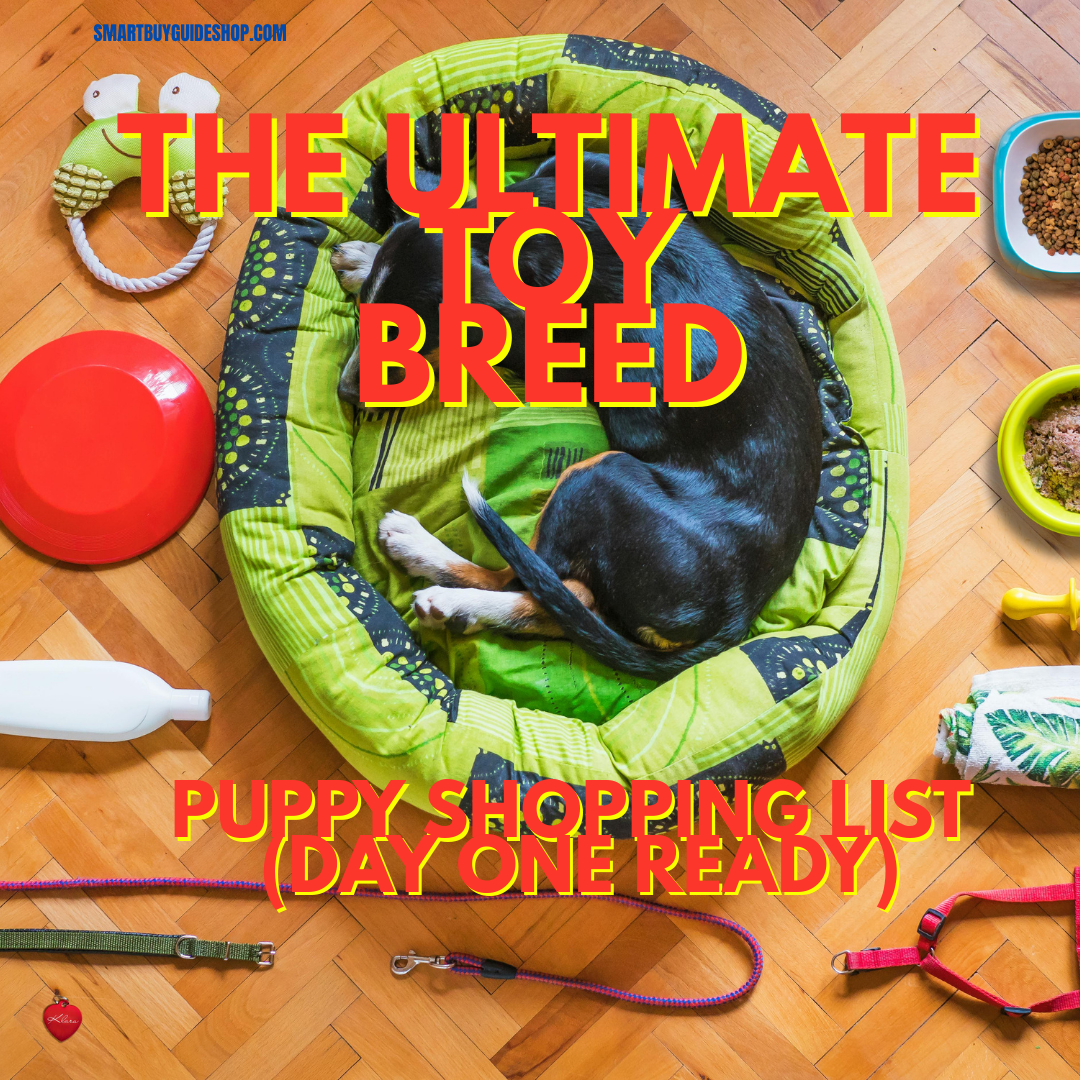
Toy breeds (Chihuahua, Pomeranian, Yorkie, Maltese, Toy Poodle, etc.) have unique physiological needs compared to larger dogs. They are prone to tracheal collapse, hypoglycemia, dental crowding, and rapid heat loss.
This list is curated specifically for these vulnerabilities to ensure your tiny new friend is safe, warm, and secure from the moment they cross the threshold.
Nutrition & Hydration (Hypoglycaemia Prevention)
Toy breeds burn energy fast and have tiny stomachs. Frequent, nutrient-dense feeding is critical.
- High-Calorie Small Breed Puppy Food: Look for kibble labelled “Toy” or “Extra Small.” The kibble size must be tiny enough to prevent choking.
- Raised Ceramic or Stainless Steel Bowls: Specific: Do not use plastic (harbours bacteria causing acne). Raised bowls aid digestion and prevent neck strain.
- Slow-Feeder Insert: Toy breeds often gulp air, leading to gas. A silicone insert for the bowl slows them down.
- Portable Water Bottle with Trough: Standard bowls are too deep for short snouts. A trough-style bottle prevents water from running up their nose.
- High-Value Treats (Soft & Tiny): Specific: Buy treats meant for training (pea-sized). Hard treats can crack fragile puppy teeth.
Safety & Containment (Trachea & Escape Proofing)
Toy breeds have fragile windpipes and can fit through surprisingly small gaps.
- Soft Vest Harness (XS): CRITICAL. Never walk a toy breed on a collar. Their tracheas can collapse easily. Look for a padded vest that distributes pressure across the chest.
- Lightweight Leash (4-6 ft): Avoid heavy chains or retractable leashes (too much sudden tension). A lightweight nylon or bio-thane leash is best.
- Puppy-Proof Baby Gates: Specific: Measure the gap between the bars. A Chihuahua head can fit through a standard Golden Retriever gate. You need “mesh” or “slat-close” gates.
- Non-Slip Rug Runners: Toy puppies slip easily on hardwood/tile, which can cause leg injuries (luxating patella). Cover high-traffic areas.
Comfort & Sleeping (Temperature Regulation)
Toy breeds lack body mass and get cold very quickly, even indoors.
- Crate with Divider (24-inch max): You don’t need a 42-inch crate. A 24-inch wire crate with a divider allows you to grow with them.
- Donut or Bolster Bed (XS): Raised sides provide security and a place to rest their head.
- Microwavable Heating Pad or Snuggle Safe: Specific: Essential for the first few weeks. Wrap in a towel and place in the bed to mimic littermate warmth.
- Puppy Sweaters/Fleece: Have 2-3 on hand for indoor use if your house is drafty or for immediate outdoor potty breaks in winter.
Potty Training (Tiny Bladders)
Toy breeds have notoriously small bladders and may be difficult to spot-train due to the small volume of urine.
- High-Absorbency Pee Pads (Small Size): Don’t buy human baby pads; get dog-specific ones with attractant scent.
- Indoor Grass Patch (with Tray): Great for apartments or bad weather. Toy breeds sometimes refuse to go outside in rain/cold.
- UV Blacklight Flashlight: Specific: Toy puppy urine is hard to see on carpets. Use this to ensure you clean every drop to prevent repeat accidents.
- Enzymatic Cleaner: Standard soap doesn’t remove the scent markers. Use a enzyme cleaner specifically for pet urine.
Grooming & Health (Dental & Nail Care)
Dental disease is the #1 health issue in toy breeds. Start care immediately.
- Finger Toothbrush or Extra-Small Brush: Human brushes are too big. Get a brush designed for mouths under 10lbs.
- Enzymatic Puppy Toothpaste: Poultry or beef flavor. Never use human toothpaste.
- Small Animal Nail Clippers: Guillotine style often works best for tiny, clear nails.
- Styptic Powder: In case you clip the quick (the nail bleeds easily in toy breeds).
- Flea/Tick Prevention: Specific: Ensure the dosage is for the 0-5 lb range. Over-dosing is dangerous for toy breeds.
Enrichment & Training (Mental Stimulation)
Toy breeds are smart but can develop “Small Dog Syndrome” (barking/fearfulness) without guidance.
- Soft Plush Toys (No stuffing): Avoid hard rubber toys that could hurt small jaws.
- Snuffle Mat: Encourages foraging behaviour and slows down eating without physical exertion.
- Clicker: For positive reinforcement training.
- Chew Chews ( Odor -Free): To soothe teething gums.
The “Day One” Go-Bag
Pack this separately so you can grab it immediately upon arrival.
- 1 Day’s worth of food (from the breeder/shelter to avoid tummy upset)
- Paper towels & Enzyme cleaner (for car accidents)
- A blanket with the litter’s scent (ask the breeder for this)
- Harness & Leash
- Water & Bowl
- Vet contact info & emergency clinic address saved in phone
Toy Breed Specific Warnings
- The “Jump” Rule: Do not let your toy puppy jump off furniture (couches/beds) for the first 6 months. Their bones are fragile. Buy pet stairs or a ramp immediately if you plan to let them on the bed.
- The “Cold” Rule: If you are cold, they are freezing. Limit outdoor time in temperatures below 50°F (10°C) until they are fully grown and vaccinated.
- The “Hand” Rule: Teach children and guests to sit on the floor to pet the dog. Picking up a toy puppy incorrectly can injure their ribs or spine.
Budget Estimate
- Essentials Only: $250 – $350
- Fully Equipped (with quality gear): $500 – $700
Tip: Do not skimp on the Harness or the Food. These are the two areas where cheap products cause long-term health damage in toy breeds.
Small Dog, Big Responsibility
Your new puppy may fit in the palm of your hand, but the love they bring will fill your entire home. Remember, owning a toy breed isn’t just about having a cute companion; it’s about being a vigilant guardian. Their fragility is their only weakness—your preparation is their strength.
By investing in the right gear today, you aren’t just buying “stuff”; you are preventing future vet visits, protecting delicate tracheas, regulating body temperature, and setting the foundation for a long, vibrant life. The peace of mind you feel on Day One because you were prepared is the greatest gift you can give your new best friend.
Welcome to the world of toy breed ownership. It’s a big job, but someone small has to do it.
Ready to Welcome Your Tiny Titan?
Don’t wait until pickup day to prepare.
- Print This List: Keep a physical copy in your car for last-minute shopping.
- Check Your Home: Get on your hands and knees to spot hazards from their perspective.
- Share This Guide: Send this to family members or guests who will be interacting with the puppy to ensure everyone follows the safety rules.
✅ START CHECKING OFF YOUR LIST TODAY
Your puppy is counting on you. Be ready.